Microbiology by the sea: Our internship at CNRS in Marseille
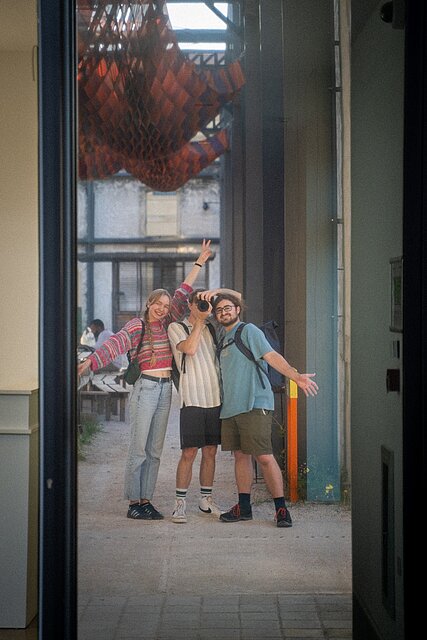
Three students in the master's program Microbiology and Infection Biology on their internship in beautiful Marseille.
A report by Cornelia Brückner, Philipp Lupo and Leon Rösch
We, that is Cornelia, Leon and Philipp, are currently studying in the master's program Microbiology and Infection Biology at the University of Tübingen. During our third semester, we had the opportunity to complete one of the research modules required for our degree program at the Centre national de la recherche scientifique (CNRS) in Marseille, France. For two months (October and November), we lived and worked in France’s oldest and second-largest city, gaining many new experiences along the way.
After we received confirmation from Marseille, the next step was to secure funding, so we applied for an Erasmus+ grant from KOOR Erasmus Services BW. For the trip from Tübingen to Marseille, we decided to drive the approximately 900 km together. To make the trip more relaxed, we planned for more time and two stops along the way.
On the day of our arrival, we went straight to the CNRS, where we were warmly welcomed by our supervisors. After an initial tour of the labs, we were introduced to the team of the Bioenergetics and Protein Engineering (BIP01) research group, led by Marianne Ilbert and Olivier Genest. Although we were part of the same research group, each of us worked in a different lab and had their own workstation there. After getting a first impression of the institute, we moved on to the next important item on our agenda: our accommodations. We had booked an apartment in advance that was within walking distance of the CNRS and had a view of the sea. Although the rent was a bit higher, since the three of us could split the cost and the Erasmus+ grant covered a large portion of it, it remained affordable for us overall.
From the start, we felt right at home in the research group that studies how bacteria adapt to environmental conditions and investigates the underlying mechanisms. Everyone worked independently on their own project.
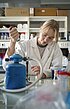
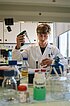
Cornelia investigated the antibacterial effects of various copper complexes on Escherichia coli. She used spot-dilution assays to determine the viability of the bacteria in the presence of these compounds. Using enzymatic reporter systems (β-galactosidase assay), she also analyzed potential changes in iron homeostasis, as some ligands of the copper complexes can bind iron and thereby potentially contribute to their toxic effects.
Leon's project focused on the SO2638 gene in Shewanella oneidensis, which is homologous to yqiT. His advisor had previously discovered that homologs of the Bacillus gene - which plays a key role in biofilm maturation - are found in a wide variety of bacteria. During the short duration of his internship, he succeeded, among other things, in deleting the gene in S. oneidensis and conducting experiments on biofilm formation and maturation.

The focus of Philipp's work was the chaperone Hsp90, which is conserved from bacteria (where it is known as HtpG) all the way up to humans. He compared the relative abundance of six potential interaction partners in S. oneidensis between a wild-type strain and an htpG-deletion strain. To do this, the genes of the potential interaction partners were cloned into an inducible vector, transferred to S. oneidensis via conjugation, expressed there, and the proteins detected by Western blot. In addition, he investigated whether the loss of HtpG, which protects the DNA repair enzyme MutS from degradation, leads to a visible phenotype.


Our supervisors always took the time to discuss the next steps with us and actively involved us in planning the projects. We could turn to any of them at any time with questions. Since none of us had any significant knowledge of French, we initially expected to face some language barriers; however, communicating in English went smoothly. Overall, the work atmosphere was very warm and welcoming, and we were well integrated into the team. A little highlight of our daily work routine was eating in the cafeteria, which offered a wide selection of main courses, appetizers, and desserts - we decided that crème brûlée was our favorite. Since October and November in Marseille are still pleasantly warm and sunny, we usually spent our lunch breaks outside with the others.
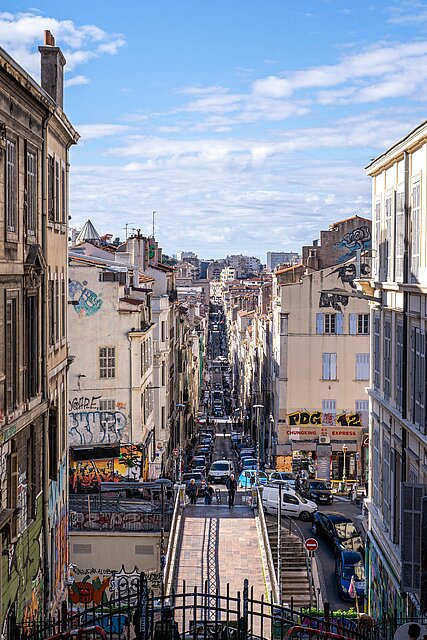
The longer summer, compared to Germany, also made it perfect for spending plenty of time outdoors and exploring the area. On the weekends, we therefore went on numerous trips, for example to Montpellier, Cassis, or Aix-en-Provence, or went hiking - for instance in the Calanques National Park or the Massif de la Sainte-Baume. We enjoyed spending our free evenings in the lively street art district of Cours Julien with its many bars and small restaurants or taking a stroll along the old port.
All in all, we look back on a wonderful and enriching time during which we not only learned a great deal professionally, but also had many experiences and gained valuable international experience. It was the perfect mix of microbiology, sunshine and fun movie nights with way too many cookies.

Leon Kokkoliadis
Public Relations Management
University of Tübingen
Interfaculty Institute for Microbiology and Infection Medicine (IMIT)
Cluster of Excellence “Controlling Microbes to Fight Infections” (CMFI)
Tel: +49 7071 29-74707 / +49 152 346 79 269


Frankfurter Allgemeine Zeitung


