

Cluster of Excellence “Controlling Microbes to Fight Infections” (CMFI)
News





About the CMFI
The surfaces of the human body host colonies of microorganisms, known as microbiomes. Along with bacteria which have a positive effect on human health, microbiomes contain potentially life-threatening pathogens. In the past, broad-spectrum antibiotics have often been used to tackle them. Nowadays it is known that this not only promotes resistance to antibiotics – in many cases it also damages the microbiome as a whole.
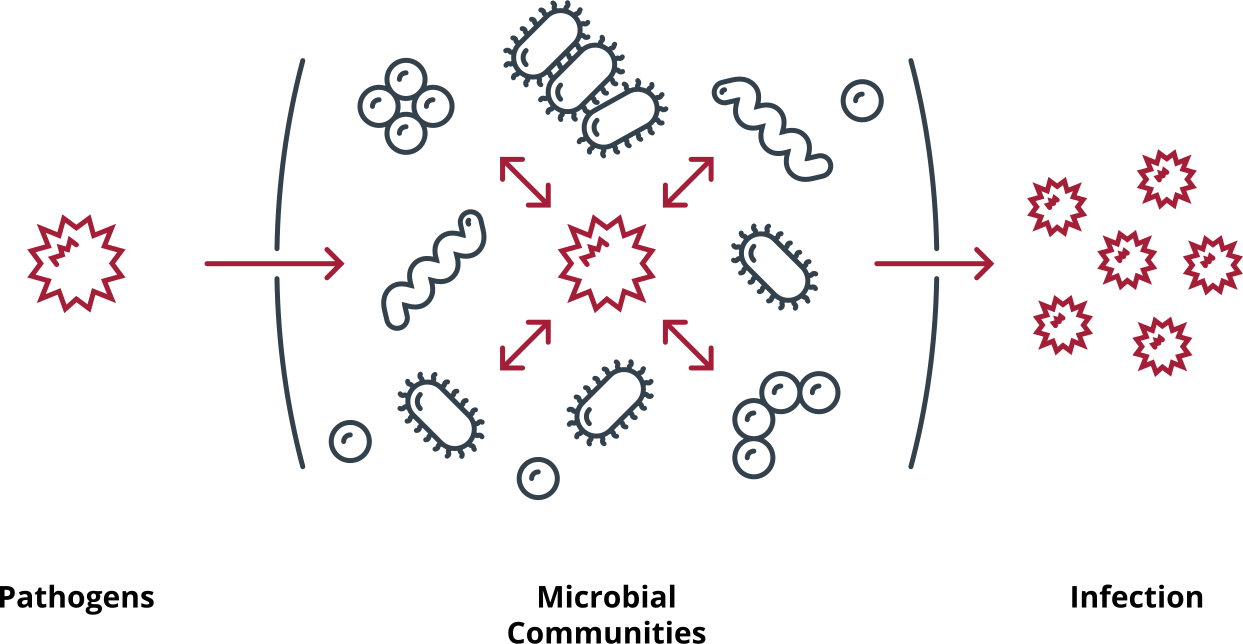
CMFI researchers aim to develop new strategies to control microbial mechanisms and fight infections.
The Cluster of Excellence CMFI brings together roughly 150 researchers from different disciplines such as infection biology, immunology, bioinformatics, pharmaceutical biology, antibiotics research, molecular and medical microbiology, biotechnology, environmental biology, systems biology, chemistry, and medical history and ethics. Their common goal is to elucidate the mechanisms of interaction between beneficial and harmful bacteria and the host in order to develop novel targeted therapeutic and anti-infective treatments.
The CMFI is one of 70 Clusters of Excellence funded by German federal and state governments as part of the Excellence Strategy to sustainably strengthen Germany as a center of science, improve its international competitiveness and make cutting-edge research at German universities visible. The CMFI has been funded since 2019 and is in its second funding phase from 2026, which runs until 2032. In addition to the University of Tübingen, the Max Planck Institute for Biology and the University Hospital Tübingen are involved in the CMFI.