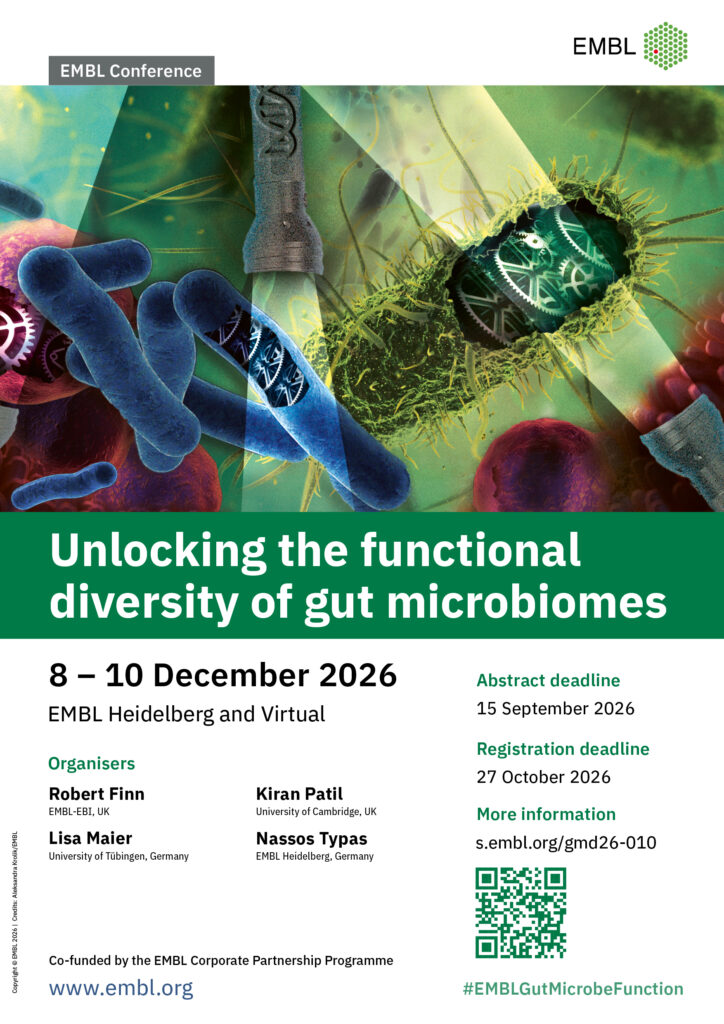
EMBL Conference: Unlocking the Functional Diversity of Gut Microbiomes


Sprecherin: Prof. Dr. Lisa Maier, Universität Tübingen
Datum: 08.-10.12.2026
Ort: EMBL Heidelberg sowie online
Abstract:
The gut microbiome is well established as being linked to human health and disease. The complex, highly personalised communities living in our gut encode 50–100 times more genes than our genome, with far-reaching effects that extend beyond the gut to our immune system and brain. In contrast to our genome, our microbiome is actionable, offering unprecedented opportunities for interventions. However, progress in this direction has been slow due to our limited basic molecular and ecological understanding of these complex microbial communities.
Over the past two decades, data-driven research has revealed important features of the human gut microbiome, such as its resilience, diversity, and highly personalised composition. However, our current view of its functional capabilities and interaction with the host is still largely descriptive. As the field now strives for causal and mechanistic insights to achieve a deeper understanding of the links between the microbiome and human health, progress is being hindered by a lack of model gut microorganisms and foundational functional knowledge.
The current knowledge of bacterial gene functions, pathways and cellular architecture is based on only a few model bacteria, which do not capture the phylogenetic and genetic diversity of the gut microbiota. As a consequence, the vast majority of genes in the gut microbiome remain “dark matter” with respect to function, that is, of elusive or completely unknown function.
This conference presents the first efforts to systematically address this vast dark genetic matter in the human gut microbiome. It aims to foster discussion and chart a framework for engaging in this direction in a systematic and collaborative manner in the future. What tools and approaches are needed? What knowledge will advance microbiome research, distinguish between correlative and causal links, reveal underlying molecular mechanisms, and ultimately progress health applications?
To advance our functional understanding and microbiome engineering capabilities, the meeting will focus on selecting and establishing new model species for the human gut microbiome. This has been the core focus of the EMBL Microbial Ecosystems Transversal Theme in recent years, and the outcomes of this work will be presented.
We envision that this meeting will stimulate broader discussions on how to harness the vast functional diversity of microbes, which impact every ecosystem on the planet.
Session topics
- Data-driven functional discovery
- Genetic tools for mapping gene function and interactions
- Multi-omics for mapping gene function and cellular organisation
- Visualising functional units and protein machines
- Gene function in ecological context (communities, host, phages)
- Looking outward and forward – links to other microbiomes